
Tired of Rigid Bible Reading Plans? Try This
Many believers reach a point where traditional Bible reading plans start to feel… limiting.
Not because the plans aren’t good —but because they’re often too rigid, too rushed, or too focused on checking boxes instead of cultivating a living relationship with God’s Word.
If you’ve ever finished a reading plan feeling like you completed something but didn’t necessarily feel transformed by it, you’re not alone.
There’s a season when structure is helpful to get us to just show up faithfully—but as we grow in spiritual maturity the Holy Spirit invites us to engage more intentionally, more attentively, and more interactively with Scripture.
This reading approach is one I often recommend when someone is ready to move beyond “canned” Bible plans and step into a rhythm that allows the Holy Spirit to guide the connections, the pacing, and the insights. It was developed by Professor Grant Horner, a Bible scholar and teacher and has been helping believers grow in the discipline and understanding of faithful Bible study for many years.
A Reading Method That Encourages Interaction, Not Just Reading
Rather than reading the Bible straight through from beginning to end, this method invites you to read across Scripture.
Each day includes short passages from different 10 sections of the Bible—such as the Law, History, Psalms, Wisdom, the Prophets, the Gospels, and the New Testament letters.
What makes this powerful isn’t the structure itself—it’s what the structure makes room for.
When you’re engaging with multiple parts of Scripture at once, you begin to notice:
Repeating themes
Echoes between the Old and New Testaments
Prophetic threads fulfilled in the Gospels
Wisdom literature speaking into historical moments
Instead of being told what to focus on, you’re invited to observe, reflect, and respond—allowing the Holy Spirit to highlight what matters most in each season. And because this plan naturally adjusts what you read in conjunction with other passages it naturally connects the entire Bible as a cohesive narrative.
At first glance, this method might make you think it would be confusing reading from so many sections at once. However, very quickly you will see that focusing on the Bible as a whole and not a bunch of separate books actually helps it to make much more sense. It also dispels the myth that it’s a collection of books written by different men when you begin to observe the cohesive nature this way. It becomes most evident that this book is divinely inspired - not just written by men.
A Natural Step Toward a More Interactive Faith
This method isn’t about consuming more Scripture—it’s about engaging Scripture differently.
It encourages you to slow down.
To notice patterns.
To ask questions.
To write things down.
To pray as you read.
It’s especially helpful for believers who want their Bible time to feel less like an assignment and more like a discovery. As you engage it you see references to passages elsewhere in the text. You see reoccurring themes and language you may have never noticed before. You begin to encounter the Author not just the text.
Because it isn’t tied to dates or perfection, it removes the pressure that so often causes people to give up on reading plans altogether. If you get interested in something and want to dig deeper you can without falling off track and you return again tomorrow, picking up where you left off.
An Invitation for the New Year (or Any Season)
I know many believers look for new Bible reading plans at the start of a year.
But I want to gently say this:
This plan isn’t just for January but January is a great time to begin.
You can begin this plan at any time.
There’s no “behind.”
That’s the beauty of it.
And if you are already in your Bible you don’t have to start this at “the beginning” you can simply start the sections you are in where you are at. There is no need to back track or jump ahead. The plans flexibility is my favorite feature.
Tools to Help You Get Started (and Stay Grounded)
As I’ve used this reading approach myself, I realized something important:
The method is simple—but having visual, practical tools makes it much easier to stay consistent.
That’s why I created a set of resources to support this way of reading:
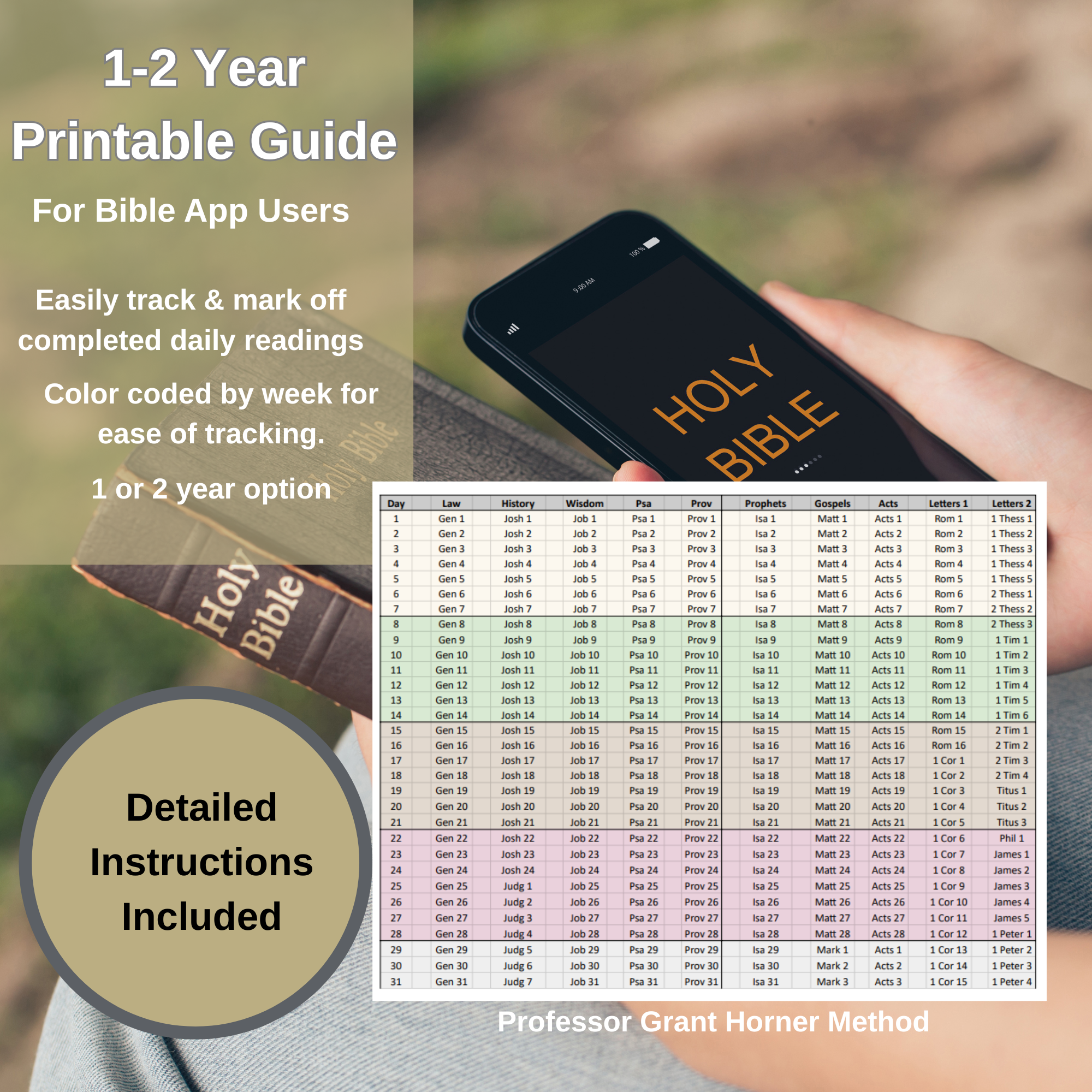
A printable Bible reading plan
Clear, organized, and easy to follow—available in 1-year and 2-year formats. While this plan easily allows you to go at your own pace, some believers want to accomplish the goal of finishing in a certain time and a plan really helps. If so I created a guide just for you. It also works well for those who prefer to read in a digital format rather than a physical Bible.
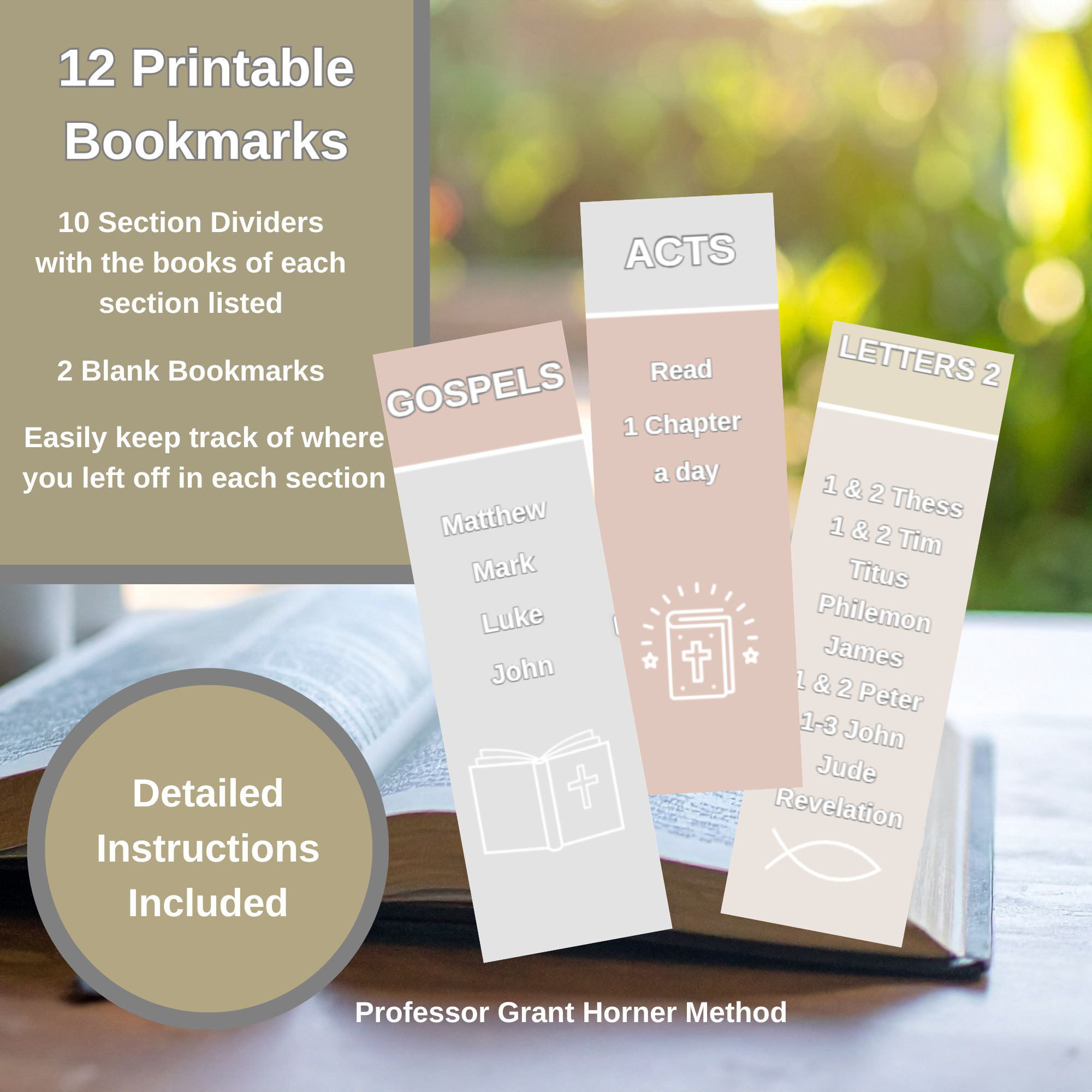
Section bookmarks
These help you keep your place in your Bible - quickly finding each section of Scripture and visually reinforcing the structure of the plan. Each bookmark has the books in each section listed on it so you can perpetually move forward without having to look up what comes next when you finish a book. Since you will have the printable version you can even check off the books on your book marks as you go and reprint a clean one each time you complete them all.
These tools are designed to be quiet helpers, not distractions—supporting your time in the Word and allowing you to be efficient and stay on track.
👉 If you’d like to explore these tools, you can find them here:
A Final Encouragement
No system replaces the work of the Holy Spirit.
But sometimes, a thoughtful structure can help us show up more consistently—and when we show up, God meets us there.
If you’ve been looking for a way to:
Deepen your understanding of Scripture
See the Bible as a connected whole
Build a steady, grace-filled rhythm of reading that stretches you just a bit.
This approach might be a beautiful fit for you.
And whether you use my tools or create your own, my hope is the same:
That God’s Word would feel less like a task…
and more like a place you return to, again and again to meet with and better know the One True Living God, your Father, Savior & Counselor.
Be blessed!