
Essential Oils and Health Through a Biblical Lens
In many homes, decisions about health and daily care are made quietly, one habit at a time. Products are added, routines are adopted, and solutions are normalized either out of necessity and perhaps because they are common, convenient, or widely recommended.
For those who steward the home, there often comes a moment of pause—a sense that what has become normal may not actually be neutral. That pause is where stewardship begins.
If you’ve ever felt unsure about how to care for your home and family in a way that truly supports long-term health and aligns with your Biblical worldview; without chasing trends or becoming overwhelmed—this perspective may help you as you think about your next steps.
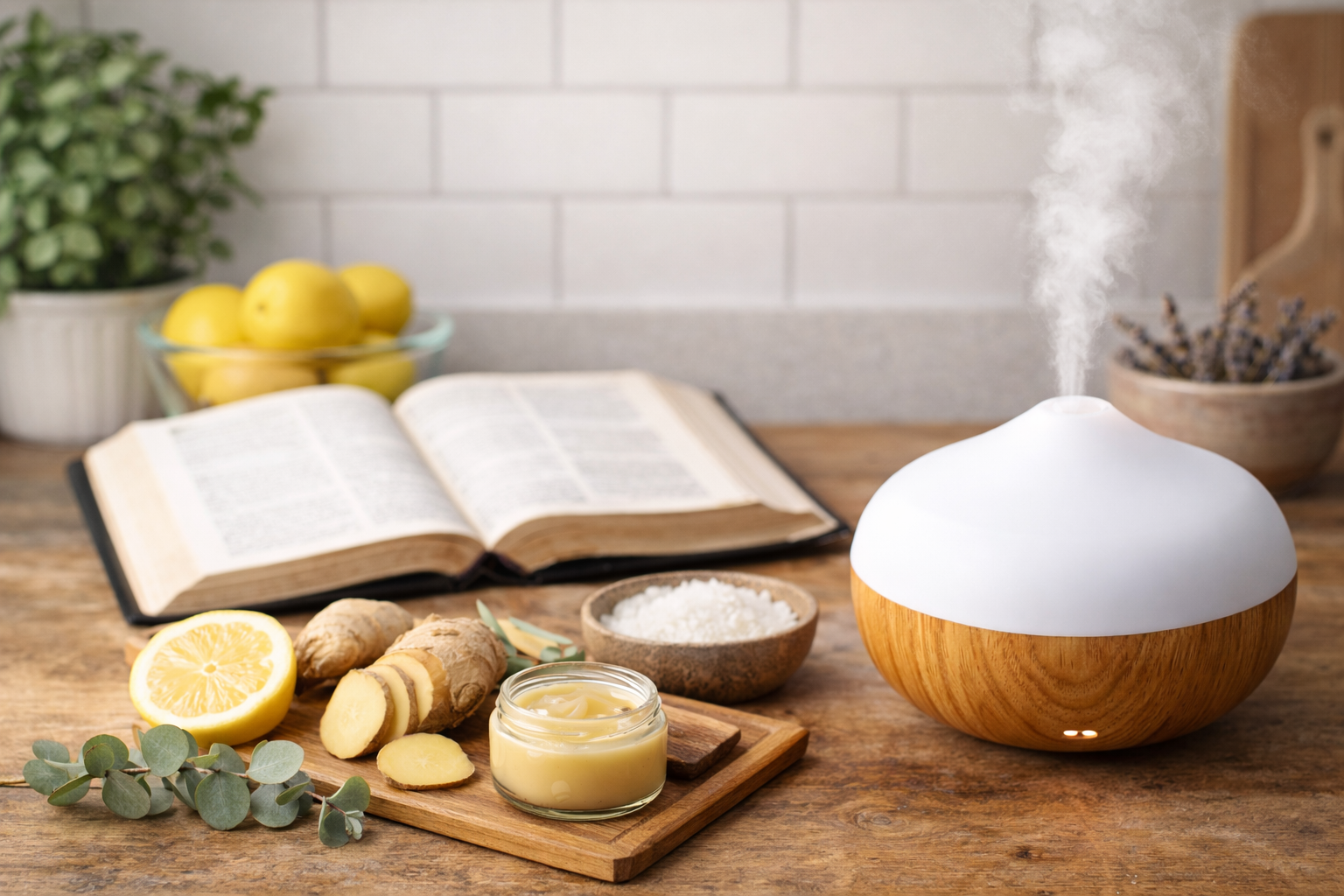
Stewardship Begins at Home
Scripture consistently points us toward stewardship: faithful care over what has been entrusted to us. That includes not only finances and time, but also the environment of the home and the wellbeing of those who live within it.
As I began to think more seriously through the lens of stewardship, I realized how much of what we used in our home had simply been adopted from culture. Products, routines, and solutions were often chosen because they were familiar or marketed as necessary, not because they had been thoughtfully evaluated.
Many of us begin this way. We begin asking questions. Is this actually supporting our home long term? Where did this approach come from? Does it align with the values I want shaping our family?
That shift—from blindly going with the flow to seeking God’s wisdom reshaped how I approached everyday care of my family and home.
Simplicity, Contentment, and Cultural Discernment
As I looked more closely, I noticed how easily I had been influenced by the latest and greatest solutions. New products and promises were constantly presented as upgrades, trendy and desirable, yet many added little value while steadily increasing our spending.
Over time, I began asking whether what we were using daily was truly supporting our health—or quietly detracting from it. That led me to evaluate not just what we were bringing into our home, but why. What had become normal through culture wasn’t always necessary, wise, or beneficial.
A simpler, more minimalist approach to caring for our home began to feel not only practical, but biblical. Scripture speaks often about contentment, wisdom, and managing resources well. Simplifying helped guard our family from unnecessary excess and from allowing trends or convenience to take a place they were never meant to hold.
By reducing what we brought into our home, we were able to protect our health, improve our quality of life, and be more intentional with our resources. Just as importantly, it allowed me to model for my children that more is not always better—that faithfulness, discernment, and simplicity align us more closely with our God.
Essential Oils as Everyday Household Tools
As I simplified how I cared for our home, essential oils naturally became part of that process. Rather than filling cabinets with single-use products, I found that a small collection of high-quality oils could support many everyday needs in a more intentional way.
For those considering essential oils, this doesn’t require learning everything at once. The value often comes from choosing a few well-used applications that replace multiple products rather than adding more. I heavily leaned into this as it made my already full and busy life simpler.
In our home, essential oils are used as a first line of support, not as a last resort. We use them proactively—supporting the body and the home in consistent ways that often help us avoid the need for stronger interventions later. This approach allows us to care for our family thoughtfully rather than reactively.
Some of the ways we use essential oils include:
Making and purchasing simple salves and balms for skin support
Creating natural cleaning solutions for the home
Supporting seasonal immune and respiratory wellness
Diffusing oils during prayer, rest, or focused work
Incorporating oils into cleansing or detoxification routines
This kind of use encourages proactive support rather than reactive symptom management. And instead of constantly adding products after the fact, we rely on a few well-chosen tools that serve our household well and support the rhythms of daily life.
Proactive Care Rather Than Reactive Living
For us, the goal is to reduce how often stronger interventions are needed. Regular diffusing helps support our bodies and the environment of the home and fend off everyday threats, often lowering how frequently we get sick.
When someone does begin to feel unwell, essential oils are our first response. Used aromatically, topically, and—when appropriate—internally, they support the body’s natural ability to respond while working with the body rather than against it.
Quality, Discernment, and Why It Matters
As essential oils became a regular part of our home, it quickly became clear that quality matters.
Essential oils are highly concentrated, and not all products on the market are the same. Many are diluted, synthetically altered, or poorly sourced, which can undermine both safety and effectiveness.
For anyone new to essential oils, this should be the most important place to begin. Quality affects not only results, but confidence—especially when oils are used regularly in shared spaces or around children. Rather than focusing first on cost; safety and quality should be viewed as the highest priority.
Asking where oils come from, how they are tested, and what standards guide their production is part of caring well for the home and family.
Where to Go From Here
If you’ve found yourself rethinking these things, you don’t have to sort through that shift on your own.
I support customers and business partners who want clarity around essential oils—how to use them wisely, how to simplify rather than accumulate, and how to choose products that genuinely support long-term health. My goal is to help you think through your options, understand quality and application, and build routines that make sense for real life.
If you’d like continued education and conversation, I share regularly inside my Facebook community, where we talk through practical use, household stewardship, and thoughtful approaches to essential oils in everyday life.
You can also join my email list if you prefer a quieter way to stay connected. I share insights, resources, and guidance there—delivered directly, without noise or pressure.
I also have a free diffuser guide available on my resources page, created by doTERRA, if you’d like a simple, practical place to begin.
I just want to encourage you that many believers are rediscovering the value of essential oils and natural solutions as part of biblical stewardship—seeking simpler, more intentional ways to care for their health, homes, and families. So be encouraged and enjoy the process of discovery and connection with other like minded communities.
I hope to connect with you soon!